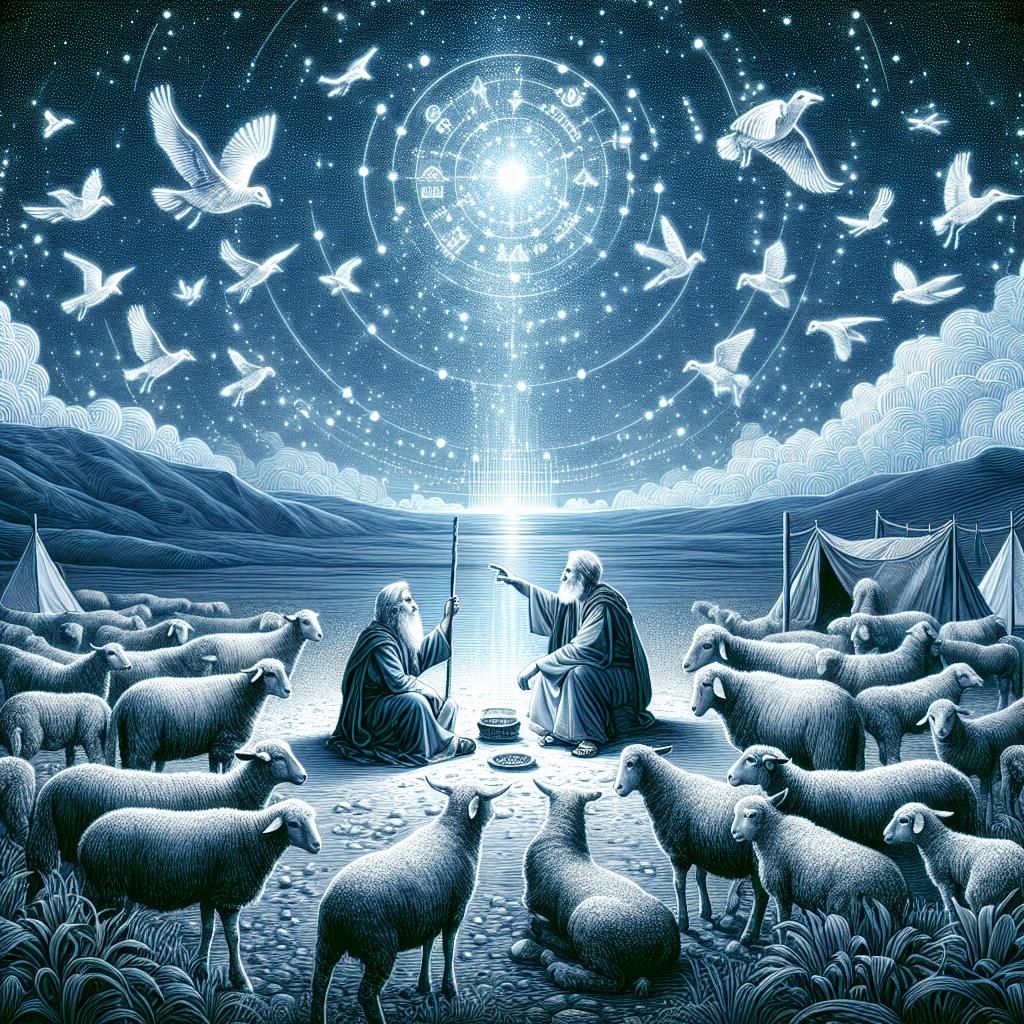
'Unveiling the Sacred Acts of Paul and Thecla: A Christian Revelation'
Posted on 01 May 2026
Acts of Paul and Thecla
The Acts of Paul and Thecla, also known as The Acts of Thecla, is an apocryphal writing from the second century. It tells the story of a young woman named Thecla who encounters the apostle Paul and becomes a devoted follower. The narrative highlights her commitment to chastity and celibacy, which leads her to break off her engagement and follow Paul to jail.
In prison, Thecla bribes the jailers and spends a night listening to Paul teach about Christian doctrine. She is subsequently sentenced to death by burning at the stake, but miraculously saved by a downpour of rain. After escaping, she reunites with Paul and they travel to Antioch.
While in Antioch, Thecla faces another trial when she is nearly raped by a nobleman. As a result of defending herself, she is arrested and sentenced to death by being thrown into an arena filled with wild animals. However, she is protected by a lioness and then jumps into a pool full of seals as a form of self-baptism. While seals are known to be man-eaters, Thecla is shielded by heavenly fire that kills the animals. Despite further attempts on her life, including an encounter with bulls, she remains unharmed.
The locals eventually give up trying to kill her, and Thecla goes on to convert many people through her testimony. She then embarks on a journey in search of Paul, finding him in Myra where he commissions her as a teacher. Thecla takes a vow of celibacy and encourages other women to remain unmarried and follow the Lord. She becomes a hermit, living in a cave that supernaturally closes around her to protect her from attempted rape.
The Acts of Paul and Thecla contains several non-biblical elements and teachings that were rejected by early Christian leaders. For example, it includes exaggerated and flamboyant miracles, such as Thecla baptizing herself, which is not found in Scripture. It also goes against the teachings of the apostle Paul, as he commissions Thecla as a female apostle and teacher, contradicting his own words in 1 Timothy 2:12. Additionally, the book promotes practices like speaking to the dead and praying for the dead, which are not supported by biblical teachings.
Despite its popularity in its time, The Acts of Paul and Thecla was ultimately rejected by early Christian leaders as false. One interesting aspect of this writing is that it provides a physical description of the apostle Paul, describing him as a man of low stature, bald on the head, with crooked thighs, handsome legs, hollow eyes, and a crooked nose. However, it is important to note that this description is not based on biblical sources.
One major issue with The Acts of Paul and Thecla is its emphasis on unbiblical views of sexuality. It presents teachings that conflict with the principles concerning marriage and sex found in the Bible. For example, it suggests that those who have wives should act as if they had none and states that virgins are more acceptable to God and will receive rewards for their virginity. However, the Bible teaches that husbands and wives should not deprive each other of sex and that celibacy does not earn salvation.
Furthermore, The Acts of Paul and Thecla aligns with Gnostic teachings by emphasizing the denial of the flesh and promoting celibacy as a requirement for spiritual service. Gnosticism views the body and material things as inherently evil. Thecla's conversion is partly attributed to her desire to be "blessed" for abstaining from sex and pleasure. This teaching on celibacy has appealed to some who believe in the necessity of chastity for spiritual service.
Why This Matters
The Acts of Paul and Thecla is an apocryphal writing that provides insights into the beliefs and practices of the early Christian community. It highlights the challenges faced by early Christians and the importance placed on chastity and celibacy in some circles. Understanding this writing can help us appreciate the diversity of beliefs and interpretations that existed within early Christianity.
Think About It
- How does The Acts of Paul and Thecla differ from the biblical accounts of the apostle Paul's life and teachings?
- What are the dangers of focusing too much on celibacy and asceticism as requirements for spiritual service?
- How can we discern between authentic biblical teachings and writings that were rejected by early Christian leaders?