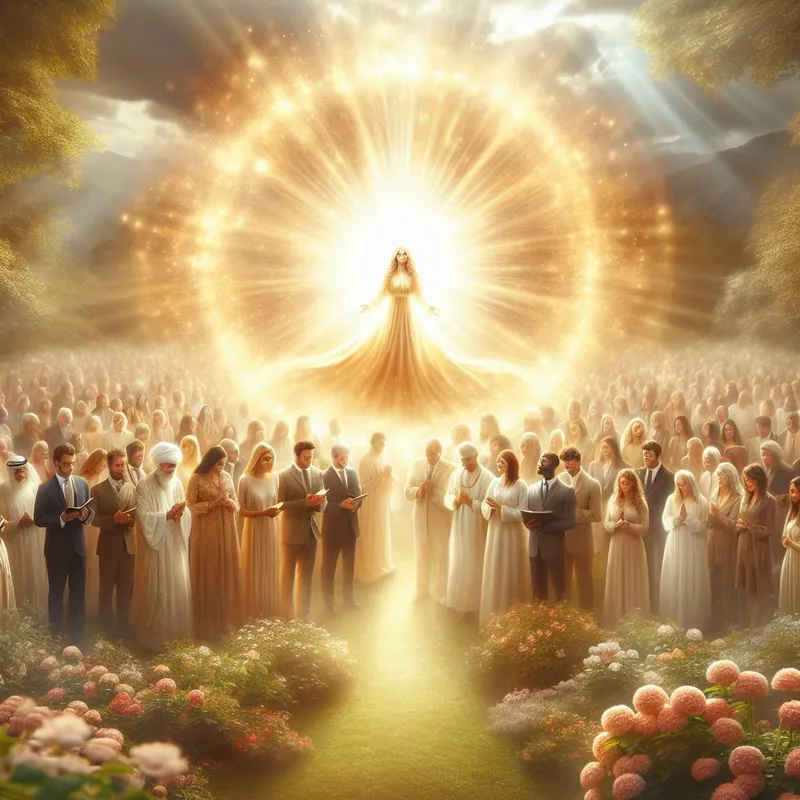
'Divine Angel Wings: Unveiling the Heavenly Significance'
Posted on 13 May 2026
Angels and Their Wings
Angels are often depicted as human-like beings with wings, but is this biblical? Let's explore the concept of angels' wings from a conservative Christian perspective.
1. Angels in Human Form
The Bible frequently portrays angels as appearing in human form. However, this does not mean that angels actually resemble human beings in their essence. They can take on a human appearance to interact with humans, but their true nature remains a mystery.
2. Cherubim and Seraphim
While most angels in the Bible are not described as having wings, there are two types of angels mentioned that do possess wings: cherubim and seraphim. Cherubim are mentioned in Exodus 25:20 and Ezekiel 10, while seraphim are described in Isaiah 6. These two types of angels may be the highest orders of angels.
Why This Matters
Understanding that some angels have wings helps us appreciate the diversity and majesty of God's creation. It reminds us that God is beyond our comprehension and has created various beings for His purposes.
Think About It
The Bible portrays cherubim and seraphim as having wings, but why would spiritual beings require wings? As spirit beings, they are not bound by the physical laws of our universe. The presence of wings might symbolize their ability to move swiftly or represent their exalted status.
3. Biblical Descriptions
The descriptions of cherubim in Ezekiel chapter 10 and seraphim in Isaiah chapter 6 are highly symbolic and difficult to fully understand. The prophets struggled to accurately convey their visions of heaven and the angels. These descriptions should be interpreted more as representations rather than literal depictions.
Why This Matters
Recognizing the symbolic nature of these descriptions encourages us to approach biblical imagery with humility and openness to different interpretations. It reminds us that God's ways are higher than ours, and we should be cautious not to limit His creation based on our limited understanding.
Think About It
Just as artists use various symbols to convey meaning in their works, God may have used symbolic imagery in the biblical descriptions of angels to convey profound spiritual truths that go beyond our human comprehension.
4. Angels as Spirit Beings
The Bible tells us that angels are spirit beings (Hebrews 1:14). As spiritual entities, they exist in a realm beyond our physical reality. Their nature and abilities transcend the limitations of our earthly existence.
5. The Purpose of Wings
While the exact purpose of wings for angels is not explicitly stated in the Bible, we can speculate on their symbolic significance. Wings may represent the angels' swift movement or their exalted status in serving God's purposes. However, it is essential to remember that these are speculations and not definitive explanations.
6. Limitations of Human Understanding
As humans, we have finite minds and limited perspectives. Our understanding of angels and their wings is confined by our earthly experiences and knowledge. It is crucial to approach these topics with humility, recognizing that there may be aspects beyond our comprehension.
Why This Matters
Acknowledging the limitations of our human understanding fosters humility and reverence toward God. It reminds us that there is much more to God's creation than what we can grasp, encouraging us to seek a deeper relationship with Him.
Think About It
Consider how your understanding of angels and their wings has influenced your perception of God's power and creativity. Reflect on how embracing the mysteries of God's creation can deepen your faith and trust in His infinite wisdom.
In conclusion, while most angels in the Bible are not described as having wings, cherubim and seraphim are exceptions. The presence of wings in these descriptions symbolizes their unique roles and attributes. Angels are primarily spiritual beings, and their wings likely serve a symbolic purpose rather than a functional one. As believers, we should approach these topics with humility, recognizing the limitations of our understanding and embracing the mysteries of God's creation.