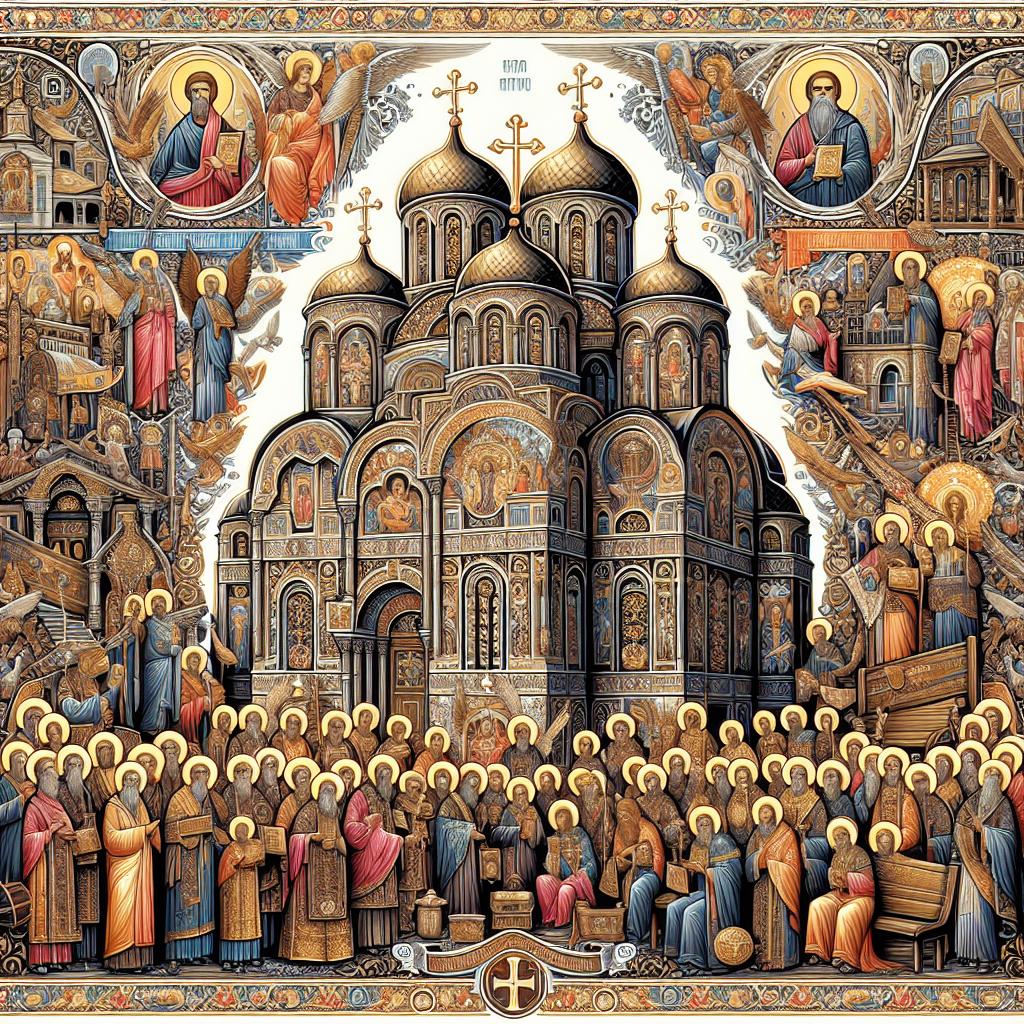
Unveiling the Rich History of the Antiochian Orthodox Church
Posted on 19 May 2026
The Antiochian Orthodox Church
The Antiochian Orthodox Church, officially known as the Greek Orthodox Patriarchate of Antioch and All the East, is a self-governing church within Eastern Orthodoxy. It is important to note that the Antiochian Orthodox Church is different from the Syriac Orthodox Church, which belongs to Oriental Orthodoxy. The Antiochian Orthodox Church has its own patriarch and patriarchate, and its headquarters are currently located in Damascus, Syria. However, it was initially based in Antioch. The church has dioceses in various countries such as Australia, Brazil, Iran, Lebanon, Turkey, and the United States.
According to the World Council of Churches, the Antiochian Orthodox Church has approximately 4.3 million members worldwide. The church traces its roots back to the biblical account in Acts 11:26, where it is mentioned that the disciples were first called Christians in Antioch. The Antiochian Orthodox Church claims that the apostle Peter founded their church in AD 34 and that Paul joined him soon after in Antioch. They also highlight Acts 6:5, which refers to "Nicolas from Antioch" as one of the first deacons, as evidence of the early importance of the Antioch church. The church asserts an unbroken line of apostolically appointed bishops from Peter's time to the present.
Doctrine and Practice
The doctrine and practice of the Antiochian Orthodox Church align with those of other churches within Eastern Orthodoxy. The church follows the Byzantine liturgy in its worship services, although there is a Western or Latin Rite movement within the church as well. Like other Orthodox churches, the Antiochian Orthodox Church observes seven sacraments, venerates icons, prays to Mary (referred to as "Mother of God") and other saints, offers prayers for the dead, and teaches a salvation based on works, including keeping the sacraments.
From a biblical perspective, it is important to critically evaluate these teachings. The Bible instructs us to direct our prayers to God alone, and it teaches that salvation is by grace through faith, apart from human works (Ephesians 2:8–9). The Orthodox doctrine of salvation places emphasis on our works rather than on Christ's work on the cross, which is contrary to biblical teachings. In Galatians 1:6–9, the apostle Paul warns against accepting any other gospel that deviates from the one he preached.
Why This Matters
Understanding the beliefs and practices of different branches of Christianity is important for Christians as it helps them discern truth from error. The Antiochian Orthodox Church has a long history and millions of adherents worldwide. By examining its teachings in light of the Bible, we can better understand the differences between biblical Christianity and other traditions. This knowledge enables us to engage in meaningful dialogue with members of other Christian communities and share the truth of the gospel.
Think About It
- How does the emphasis on works in the Antiochian Orthodox Church's teaching compare to what the Bible teaches about salvation?
- Why is it important for Christians to be aware of the differences between various branches of Christianity?
- How can understanding the beliefs of other Christian traditions help us in sharing our own faith?
In conclusion, the Antiochian Orthodox Church is a self-governing church within Eastern Orthodoxy with its own patriarchate. It traces its origins back to Peter and Paul's ministry in Antioch. While it shares many beliefs and practices with other Orthodox churches, it is essential for Christians to evaluate these teachings in light of biblical truth. By understanding the differences between various branches of Christianity, we can engage in meaningful discussions and share the gospel effectively.
