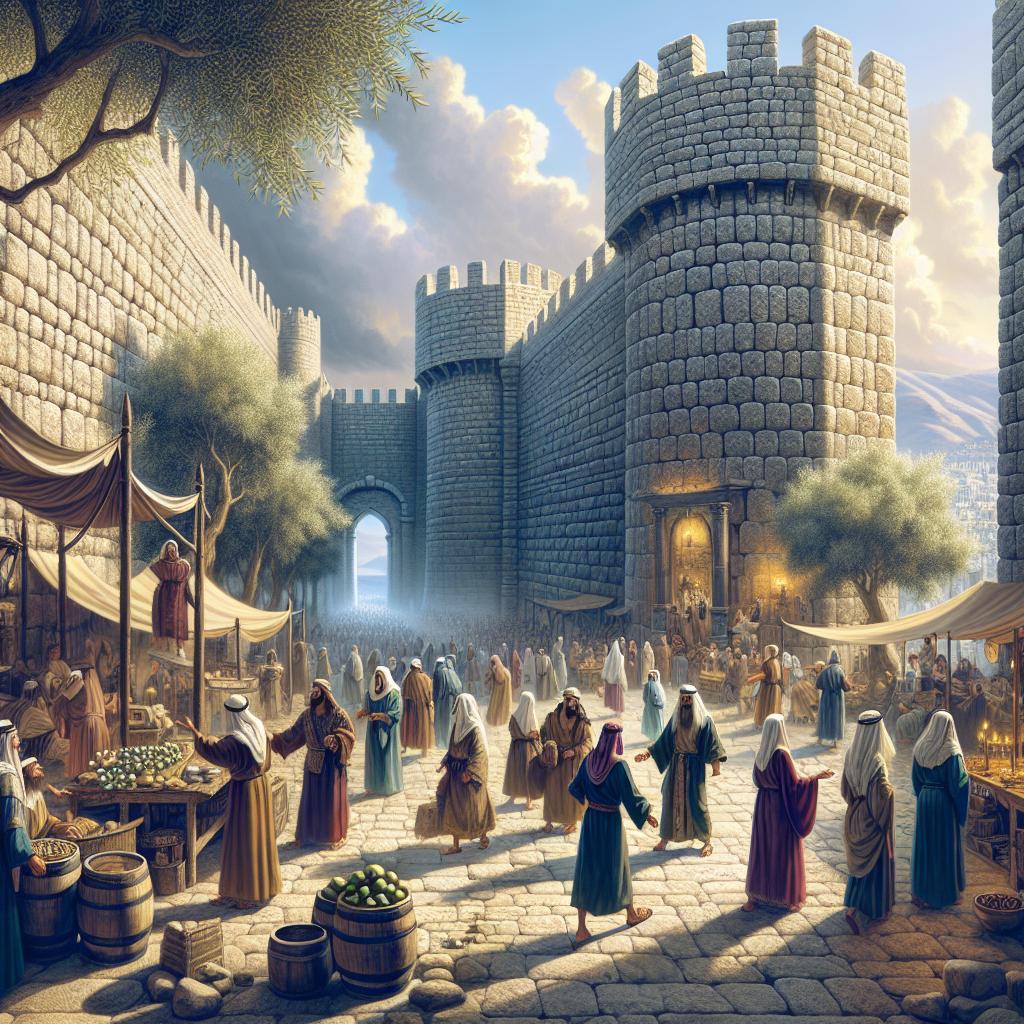
'Ashkelon in the Bible: Unveiling Biblical Insights for Christian Faith'
Posted on 28 May 2026
Ashkelon in the Bible
Ashkelon, a coastal city in southern Israel, holds significant importance in the biblical narrative. Located on the Mediterranean shore north of Gaza and about 36 miles south of modern-day Tel Aviv, Ashkelon was the oldest and largest seaport in ancient Canaan. Throughout history, it was ruled by various nations and tribes, including the Egyptians, Canaanites, Assyrians, Greeks, and Philistines.
The Battles for Ashkelon
The Bible recounts several battles fought for control over Ashkelon. In Judges 1:17–18, it is mentioned that the armies of Judah, accompanied by the Simeonites, attacked and completely destroyed the city. This victory led to the naming of Ashkelon as Hormah. Additionally, Joshua includes Ashkelon as one of the five cities held by Philistine rulers, alongside Gaza, Ashdod, Gath, and Ekron.
The contention between the Israelites and the Philistines is a recurring theme in the Old Testament. Samson's wrath against the Philistines led him to strike down thirty men in Ashkelon (Judges 14:19). David also refers to Ashkelon in his lament for Saul and Jonathan, urging that news of their deaths not be proclaimed there.
Prophecies of Destruction
Several prophets foretold the ultimate destruction of Ashkelon. Jeremiah received a message from God instructing him to make all nations drink from a cup filled with His wrath. Among those nations was Ashkelon (Jeremiah 25:15–16). Jeremiah further prophesied that Ashkelon would be silenced (Jeremiah 47:5) and that God had ordered His sword to attack Ashkelon and its coast (Jeremiah 47:6–7).
Zechariah also spoke of God's judgment on Israel's enemies, stating that Ashkelon would see it and fear (Zechariah 9:5). Zephaniah unequivocally declared that Gaza would be abandoned and Ashkelon left in ruins (Zephaniah 2:4).
Historical Events and Modern Day
Assyria conquered Ashkelon around 734 BC, putting an end to Philistine rule. The city changed hands multiple times over the centuries, with Greeks, Maccabees, Romans, Muslims, and Crusaders all having a presence there. Some believe Herod the Great was born in Ashkelon, as he built a palace and aqueduct in the city.
After being destroyed by Saladin in AD 1191, Ashkelon remained in ruins for a century. Eventually, a town called Al-Majdal was established near the original site of Ashkelon by Arabs. Following the Arab-Israeli War of 1948-49, Israel formally gained control of the area and renamed it Ashkelon.
This shift of ownership could be seen as a fulfillment of Zephaniah's prophecy that Ashkelon would eventually become a peaceful place belonging to Judah. The land by the sea would become pastures for shepherds and flocks, where the remnant of the people of Judah would find pasture. In the evening, they would lie down in the houses of Ashkelon, with the Lord caring for them and restoring their fortunes (Zephaniah 2:6–7).
Why This Matters
Understanding the significance of Ashkelon in biblical history helps us appreciate the context in which these events occurred. It highlights the ongoing struggle between the Israelites and their enemies throughout the Old Testament. Additionally, it demonstrates God's faithfulness to His prophecies and His ultimate plans for His people.
Think About It
Consider how the historical events surrounding Ashkelon are interconnected with biblical prophecies. Reflect on the fulfillment of these prophecies and how they reveal God's sovereignty and control over human history. Consider how Ashkelon's transformation from a battleground to a place of peace can symbolize God's redemptive work in our lives.