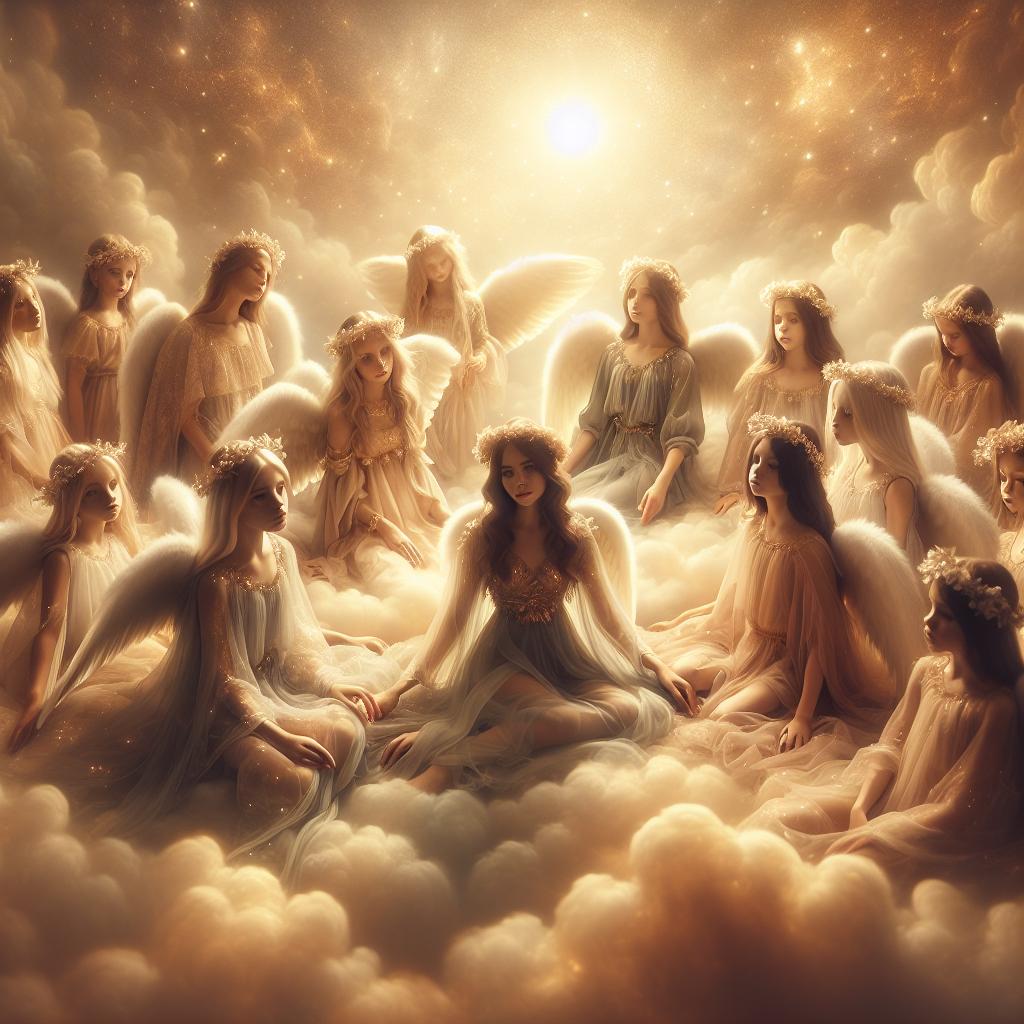
'Miraculous Assumption of Mary: Revealing Divine Glory'
Posted on 31 May 2026
Assumption of Mary
The Assumption of Mary, also known as the Assumption of the Virgin, is a belief held by the Roman Catholic Church and, to a lesser extent, the Eastern Orthodox Church. It teaches that after the death of Mary, the mother of Jesus, she was resurrected, glorified, and taken bodily to heaven. The term "assumption" comes from a Latin word meaning "to take up."
Origins and Development
The doctrine of the Assumption of Mary gained prominence in an apocryphal writing called the Transitus Mariae, which dates back to the 5th century. Over time, a yearly feast honoring Mary evolved into the Feast of Dormition (also known as "falling asleep"), which commemorated her death. As this practice spread to the West, more emphasis was placed on Mary's resurrection and the glorification of her body as well as her soul. Consequently, the feast was renamed the Assumption and is celebrated on August 15th, as it was during the Middle Ages. In 1950, Pope Pius XII officially declared the Assumption of Mary as dogma in the Roman Catholic Church.
Lack of Biblical Basis
Although God is recorded to have assumed both Enoch and Elijah into heaven (Genesis 5:24; 2 Kings 2:11), there is no biblical evidence for the Assumption of Mary. The Bible does not mention Mary's death or provide any details about her life after Acts chapter 1. The story of Mary's Assumption involving her resurrection and the gathering of the apostles to witness the event is considered folklore.
Theological Implications
The doctrine of the Assumption arises from elevating Mary's status to a level comparable to that of Jesus. Some Roman Catholics even teach that Mary was resurrected on the third day and ascended into heaven like Jesus did. However, the New Testament states that Jesus alone was resurrected on the third day (Luke 24:7) and ascended bodily into heaven (Acts 1:9). Ascribing identical events to Mary implies that she shares some attributes with Christ. In the Roman Catholic Church, the Assumption of Mary plays a significant role in why Mary is venerated, worshipped, adored, and prayed to. Teaching the Assumption is seen as a step towards equating Mary with Christ and essentially proclaiming her deity.
Why This Matters
The belief in the Assumption of Mary is a matter of theological significance within the Roman Catholic Church. It influences their understanding and veneration of Mary. Understanding this doctrine allows us to engage with Catholics on an informed level and have meaningful conversations about the role of Mary in salvation history.
Think About It
- Consider the biblical evidence for the Assumption of Mary. Reflect on why it is important to base our beliefs on what Scripture teaches.
- Contemplate the implications of ascribing attributes of Christ to Mary. How does this affect our understanding of who Jesus is and what He accomplished?
- Reflect on the role of tradition in forming beliefs within different Christian traditions. How can we navigate between Scripture and tradition in our own faith?