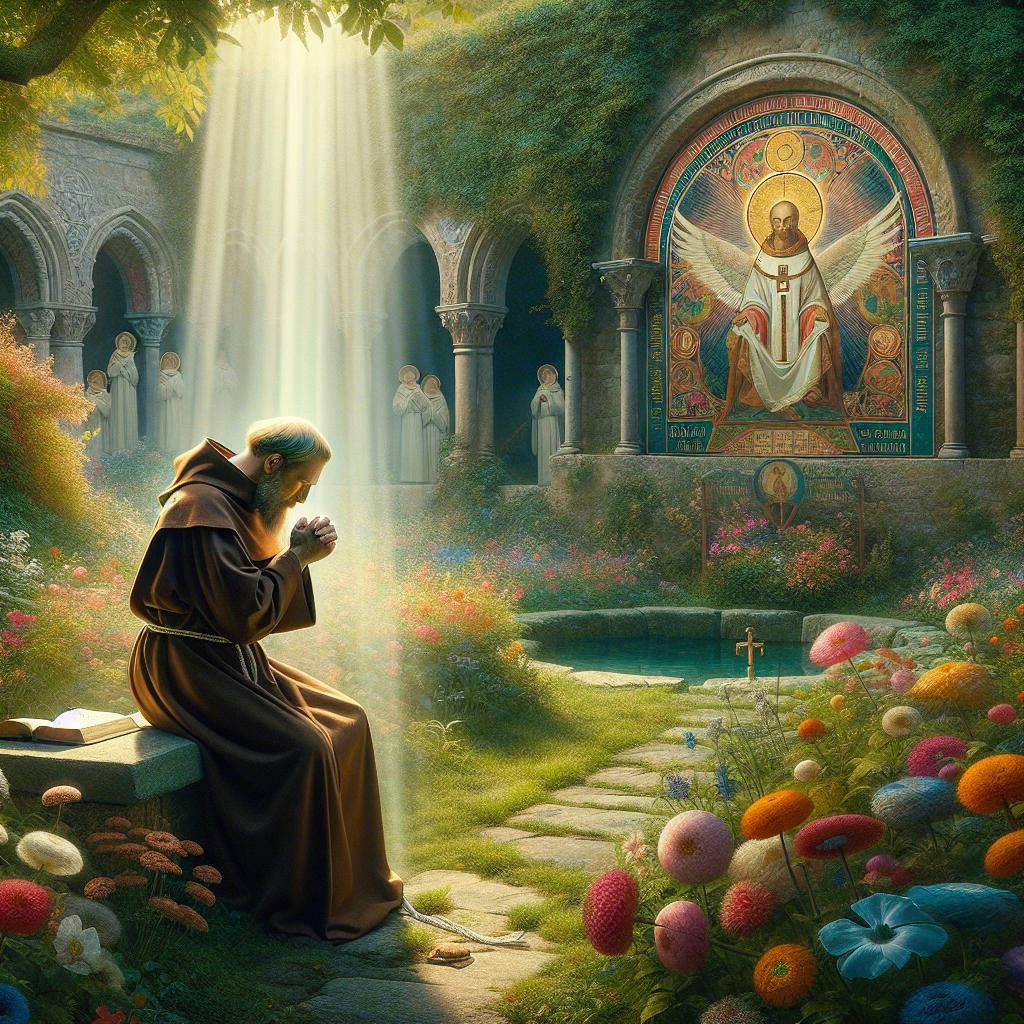
'Bernard of Clairvaux: The Pious Monk Who Inspired Faithful Devotion'
Posted on 11 June 2026
Bernard of Clairvaux
Bernard of Clairvaux was a significant figure in medieval Christianity. He was a French Catholic mystic, monk, and influential church leader in the Middle Ages. Bernard was born in 1090 to parents of lower French nobility. He joined a monastery and became known for his eloquence as a writer. His hymn "O Sacred Head Now Wounded" and the traditional Catholic "Prayer to the Shoulder Wound of Jesus" are considered masterpieces today.
Bernard's devoutly holy lifestyle and leadership brought both success and fame. He founded more than 300 monasteries, the most notable being in Clairvaux, France. His influence extended to both politics and church affairs, where he played a role in drafting the framework for the Knights Templar and resolving disputes over the papacy. However, his involvement in the Crusades became a blemish on his reputation when the Second Crusade failed.
Bernard was one of the earlier reformers who spoke out against changes in Catholic theology. He advocated for a more personal, spiritual, and practical understanding of faith, similar to Anselm before him. He promoted the mystical practice of Lectio Divina and expressed ideas that supported imputed righteousness and the doctrine of sole fide. His writings on these topics were later used by Reformers to support their efforts.
However, it is important to note that Bernard also supported indulgences and was a major advocate of Mariology. He wrote about the virtues of Mary and viewed her as Mediatrix. This contributed to the cult of Mary-worship during the Middle Ages.
Bernard of Clairvaux died in 1154 and was canonized by the Roman Catholic Church about 21 years later. As a writer, theologian, and public figure, Bernard remains one of the most influential figures in medieval Christianity.
Why This Matters
The life and teachings of Bernard of Clairvaux provide valuable insights into the religious and political landscape of the Middle Ages. His influence in both church and world affairs demonstrates the interconnectedness of religion and power during this period. Bernard's emphasis on personal spirituality and practical faith resonates with individuals seeking a deeper connection with God today. However, his support for certain practices, such as indulgences and Mariology, highlights the complexities of theological beliefs within Christianity.
Think About It
How does Bernard's emphasis on personal spirituality compare to the emphasis on rituals and sacraments in Catholicism during his time?
What impact did Bernard's involvement in the Crusades have on his reputation and influence?
How do Bernard's writings on faith and spirituality align with or differ from Protestant Reformation teachings?
What can we learn from Bernard's views on Mary and his advocacy for her as Mediatrix?
In what ways can we apply the principles of personal spirituality and practical faith advocated by Bernard in our lives today?