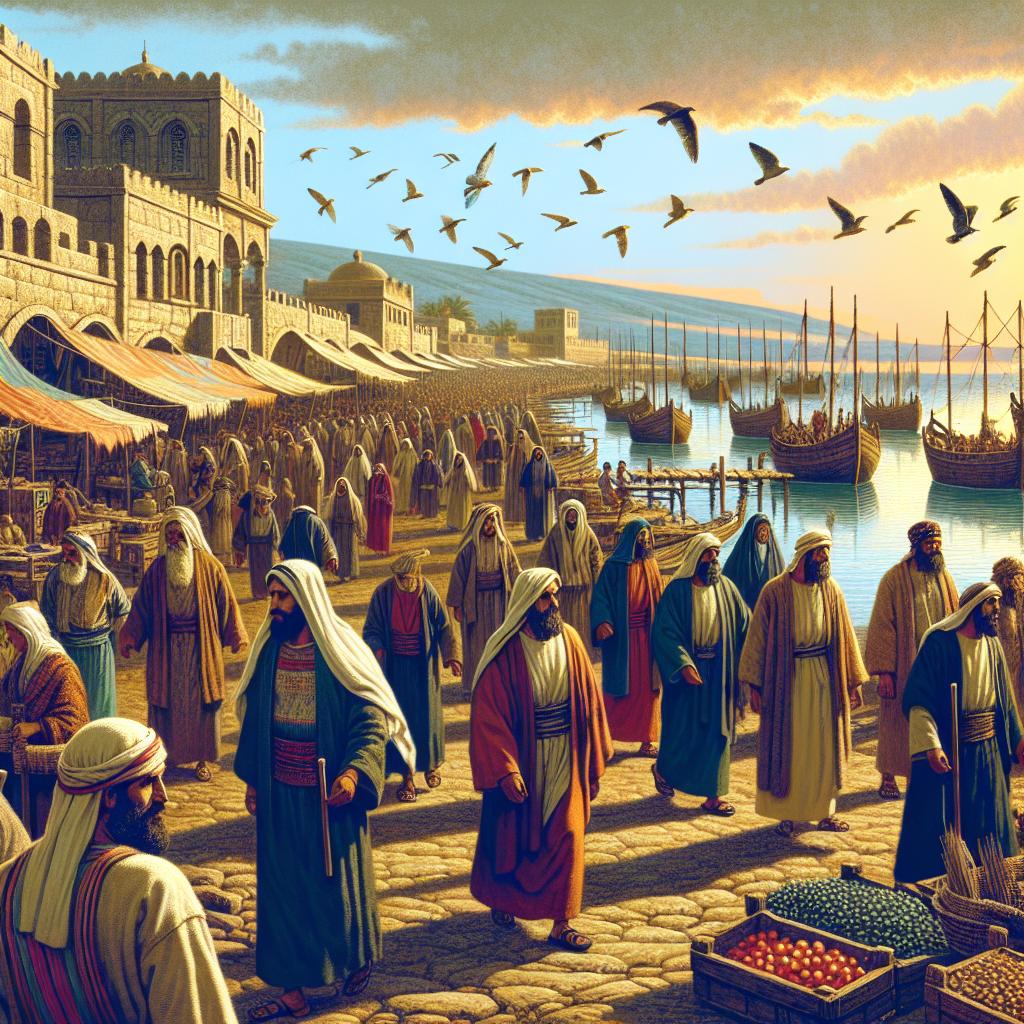
'Unveiling the Mysteries of Bethsaida: Exploring its Significance in the Bible'
Posted on 15 June 2026
Bethsaida in the Bible
Bethsaida is a small town in Galilee that is mentioned in the Bible as the birthplace of three of Jesus’ disciples: Phillip, Peter, and Andrew (John 1:44–45; 12:21). It is important to note that there may have been two towns called Bethsaida during the time of Jesus, as having two cities with similar names was common in those days. However, the Bethsaida most commonly referred to in Scripture was located near where the Jordan River flows into the Sea of Galilee on the north side.
Miracles in Bethsaida
Bethsaida was the site of several miracles performed by Jesus, which made it a significant location in the biblical narrative. In fact, Jesus Himself mentioned Bethsaida when He said, “Woe to you, Chorazin! Woe to you, Bethsaida! For if the miracles that were performed in you had been performed in Tyre and Sidon, they would have repented long ago in sackcloth and ashes” (Matthew 11:21). This illustrates the importance of these miracles and their impact on the people of Bethsaida.
One of the notable miracles that took place in Bethsaida was the restoration of sight to a blind man (Mark 8:22–26). Another significant event that likely occurred near Bethsaida was the feeding of the 5,000 (Luke 9:10–17). Additionally, Bethsaida is famously associated with one of Jesus’ most well-known miracles - walking on water. Jesus had sent His disciples ahead on a boat on the Sea of Galilee towards Bethsaida while He spent time in prayer. In the midst of their journey, a strong wind made rowing difficult for them. However, they were astounded when they saw Jesus walking towards them on top of the waves. Their fear disappeared when Jesus got into the boat with them and calmed the waves. This miracle occurred on Jesus' way to Bethsaida.
The Fate of Bethsaida
After Jesus ascended into heaven, Bethsaida is rarely mentioned in the Bible. Most scholars believe that the city was renamed Julias (in honor of Augustus’s daughter) by Philip the tetrarch, who was the grandson of Herod the Great, during Jesus’ public ministry. However, all mention of the city disappeared by the second century, and only buried ruins remain today.
Why This Matters
Bethsaida holds significance in the biblical narrative as the birthplace of three of Jesus’ disciples and as the location of several miraculous events. It serves as a reminder of the power and authority of Jesus and His ability to perform miracles. The miracles performed in Bethsaida reveal Jesus’ divine nature and His ability to demonstrate God’s power on Earth. These miracles also highlight the responsibility and privilege that comes with hearing and understanding the gospel message.
Think About It
Consider the impact of witnessing firsthand the miracles that Jesus performed in Bethsaida. How might these miracles have affected the people who witnessed them? How does this relate to our own responsibility to respond to God's message today?