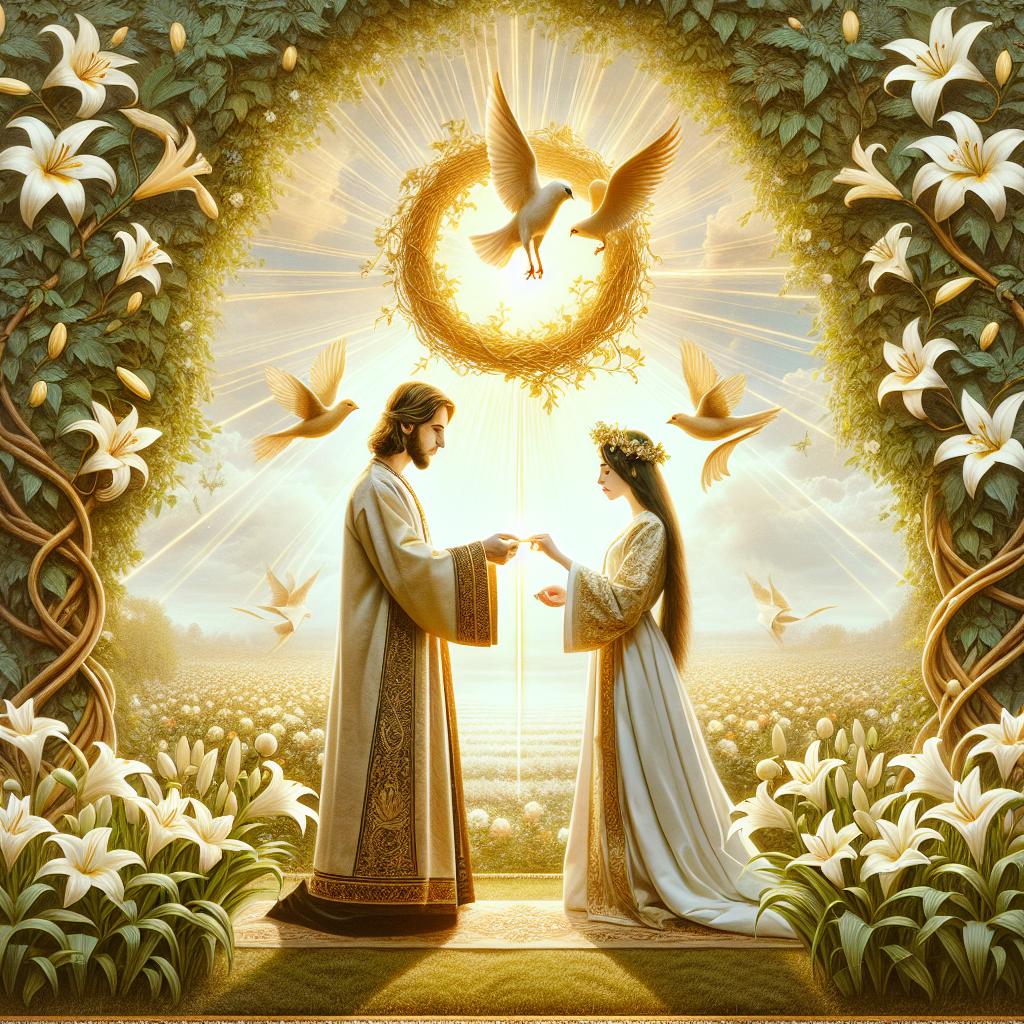
'Divine Betrothal: Unveiling the Sacred Covenant of Love'
Posted on 17 June 2026
Betrothal in Biblical Times
In Biblical times, betrothal was a significant step in the process of marriage. Although the specific traditions and practices varied across different cultures and time periods, there were certain common elements that characterized betrothal during this era. Similar to modern Western countries, engagements in Bible times were heterosexual relationships that served as a preliminary stage before marriage.
During the engagement period, the bride would have time to prepare for her new role and gather her personal belongings. She would also need to adjust her relationships with her parents, siblings, and friends. In some cases, the betrothal period provided an opportunity for the bride to become better acquainted with her fiancé. Similarly, the groom used this time to make necessary preparations, such as completing the house where he would raise his family.
Arranged marriages were quite common in Bible times, with some couples not even knowing each other until their wedding ceremony. In cases where the bride or groom was too young for marriage, a longer betrothal period would ensue. One aspect that may seem strange to modern Westerners is that neither sexual attraction nor love was considered a necessary requirement for engagement or marriage during this time.
Parents who arranged marriages for their children believed that love and affection would naturally develop as a result of the intimate acquaintance and sexual bonding that occur within a marriage. This mindset helps explain why Ephesians 5:25-33 encourages Christian husbands to love their wives and Christian wives to respect their husbands. It suggests that love and respect would grow within the context of the marriage itself and were not necessarily required beforehand.
Why This Matters
Understanding the cultural context of betrothal in Biblical times can provide us with insights into how marriages were formed and perceived during that era. It helps us appreciate the diversity of traditions and practices across different cultures and highlights the significance placed on family arrangements and commitments. Additionally, recognizing that love and affection were not always the primary considerations in the formation of marriages can shed light on the biblical teachings regarding marital relationships and responsibilities.
Think About It
- How does the concept of betrothal in Bible times differ from modern Western practices of engagement?
- In what ways do you think the emphasis on intimate acquaintance and sexual bonding within marriage impacted the dynamics of marital relationships during this era?
- Considering that arranged marriages were common, do you think it is possible for love and affection to develop after marriage, even without a prior romantic relationship?
Betrothal as a Formal Contract
In most eras of Bible history, betrothal involved two families entering into a formal contract. This contract was as binding as marriage itself, making it more of a business transaction between families rather than a personal, romantic choice. Dowry or bride price agreements were often included in these contracts, further solidifying the commitment. If the betrothal was broken, repayment of the dowry would be required.
Unlike modern Western culture, where there is a clear distinction between betrothal/engagement and marriage, the line between the two in Bible times was much less definitive. After the betrothal, only three matters remained: the wedding celebration, the bride's move into the groom's house, and the consummation of the marriage.
Why This Matters
Understanding betrothal as a formal contract helps us grasp the seriousness and commitment involved in this stage of marriage in ancient times. It reveals how families played a significant role in arranging marriages and how financial agreements were an integral part of these arrangements. This knowledge can enrich our understanding of biblical stories and teachings related to marriage, such as the account of Mary and Joseph.
Think About It
- How do you think the inclusion of financial agreements in betrothal contracts affected marital relationships?
- In what ways does recognizing betrothal as a formal contract challenge or affirm our modern views on marriage?
- Does the emphasis on the role of families and financial arrangements in betrothal change your perspective on the significance of romantic love in marriage?
The Example of Mary and Joseph
One of the most well-known examples of betrothal in the Bible is that of Mary and Joseph. According to the Gospel of Matthew, Mary was pledged to be married to Joseph when she became pregnant. At first, Joseph believed that Mary had violated their betrothal, which was as legally binding as a marriage contract. He considered divorcing her quietly, not wanting to expose her to public disgrace.
The fact that a "divorce" was necessary to break the betrothal highlights the legal significance and commitment associated with this stage of marriage. It also demonstrates that Joseph perceived himself as Mary's husband, even before the wedding ceremony took place. Ultimately, an angel appeared to Joseph in a dream, explaining that Mary's pregnancy was the result of a miraculous conception by the Holy Spirit. This revelation led Joseph to continue with the marriage plans.
Why This Matters
The example of Mary and Joseph provides a concrete illustration of betrothal in action within a biblical context. It reveals the cultural norms and expectations surrounding betrothal during that time period, emphasizing its legally binding nature. This event also holds significant theological importance as it relates to the miraculous birth of Jesus Christ.
Think About It
- How does understanding the legal significance of betrothal change your perception of Mary and Joseph's relationship and their decision to proceed with marriage?
- In what ways does this account challenge or affirm your understanding of faithfulness and commitment within a marital relationship?
- Reflect on the role of divine intervention in Mary and Joseph's story. How might this impact your understanding of God's involvement in human relationships?
By delving into the historical context and cultural practices surrounding betrothal in Biblical times, we gain valuable insights into the significance of this stage in the process of marriage. It helps us appreciate the diversity of traditions and practices across different cultures, the role of families in arranging marriages, and the legal commitments associated with betrothal. Furthermore, examining specific examples, such as the betrothal of Mary and Joseph, deepens our understanding of biblical narratives and theological concepts.
