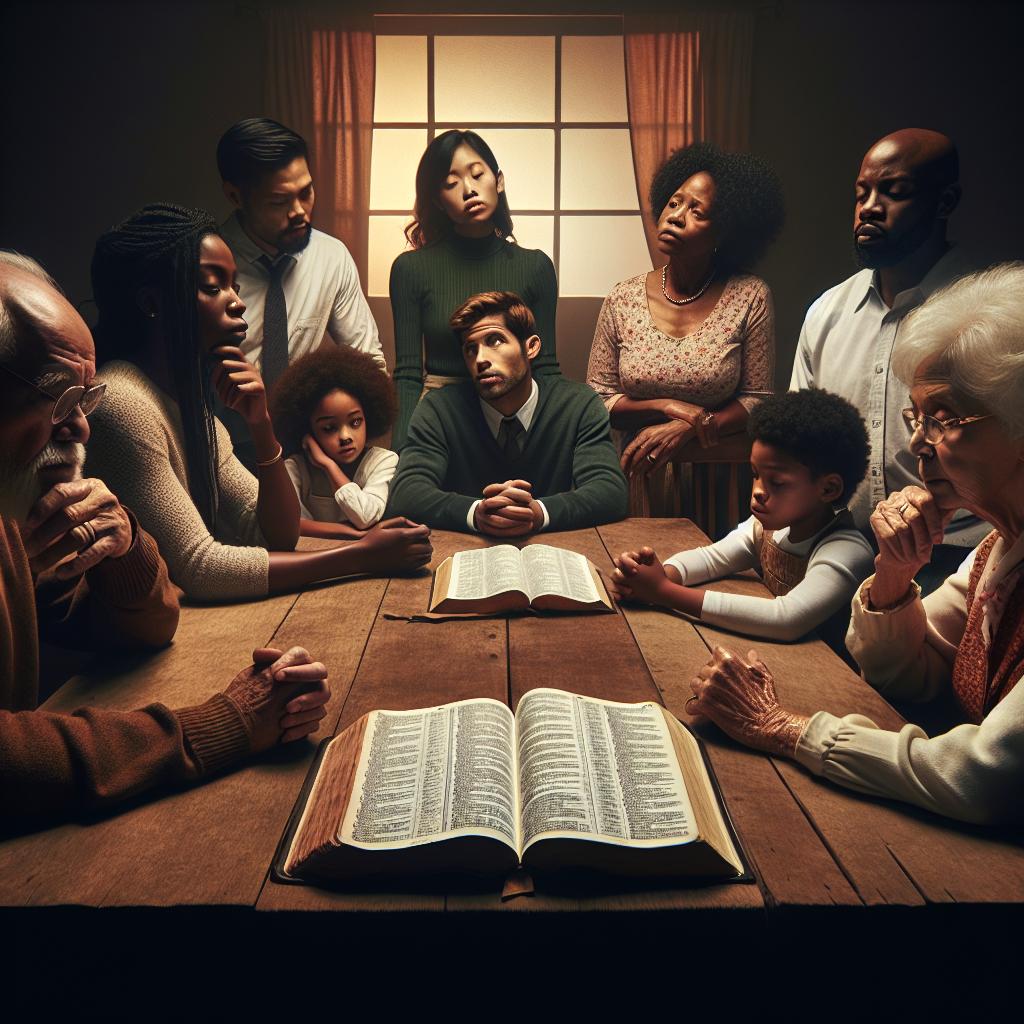
'Unlocking Biblical Inheritance: A Guide to Spiritual Wealth'
Posted on 04 July 2026
Bible Inheritance
In the Bible, inheritance refers to the gift of honor and support given by a patriarch to his sons (and sometimes daughters). It was meant to provide for the family's needs and maintain their status. Throughout the Old Testament, inheritance is often associated with God bestowing the Promised Land on the Israelites. This can be understood as the Heavenly Father providing for His sons and daughters.
The land given by God to the individual families was not meant to be permanently disposed of. If they needed to sell it, it was to be returned during the year of Jubilee (Leviticus 25:23-38). The Bible establishes specific guidelines for inheriting family property. According to Deuteronomy 21:15-17, the eldest son was to inherit a double portion. In cases where there were no sons, daughters were allowed to inherit their father's land (Numbers 27:8). If there were no direct heirs, a favored servant or more distant kinsman could inherit the land (Genesis 15:2; Numbers 27:9-11). Importantly, the land could not pass to another tribe. The purpose of passing on the land was to ensure that the extended family had a means of support and survival. While inheritance was generally assumed, Proverbs 13:22 speaks of it as a particular virtue.
In the New Testament, the concept of inheritance takes on a spiritual dimension. Jesus downplays the importance of an earthly inheritance in Luke 12:13-21, explaining that it can lead to greed and an obsession with wealth. Instead, He encourages storing up treasures in heaven. We, as believers, receive our inheritance from God (Acts 20:32; Ephesians 1:11, 14, 18). Similar to Abraham in Hebrews 11:8 and 13, we will not receive our inheritance in this lifetime (1 Peter 1:4). So, what exactly is this inheritance? According to Psalm 37:11 and Matthew 5:5, it is the whole earth. James 2:5 describes it as the kingdom of God, and Hebrews 11:16 refers to it as a heavenly country. First Corinthians 2:9 tells us that it is something so wonderful that "eye has not seen and ear has not heard, and which have not entered the heart of man, all that God has prepared for those who love Him." Revelation 21 goes on to describe a new heaven and new earth where God will dwell among His people and take away tears, mourning, pain, and death.
As Christians, we are not bound to the Old Testament law. Instead, we are called to follow the two greatest commandments: loving God and loving others (Matthew 22:34-36). The Old Testament provides practical examples of how to fulfill these commandments. In the context of inheritance, it is exemplified through parents ensuring their family is cared for after their death. In modern times, this may not necessarily mean passing on land or material possessions. It can include imparting good character, ensuring children receive an education, or training them in a profession. However, when most people think of parents leaving an inheritance for their children, they often refer to material possessions.
The Bible does support the idea of parents leaving their material possessions, wealth, or property to their children. At the same time, parents should not feel obligated to save up everything for their children's inheritance at the expense of neglecting their own needs. It should never be a matter of guilt or obligation but rather an act of love—an opportunity to express love and appreciation to their children. However, beyond material inheritance, parents have a greater responsibility to ensure their children are aware of the spiritual inheritance they will receive if they follow Christ. Parents are called to teach their children about God's expectations (Deuteronomy 6:6-7; Ephesians 6:4) and bring them to Christ (Mark 10:14). By doing so, parents can provide for their children in the most significant way possible.
Why This Matters
Understanding the concept of inheritance in the Bible helps us grasp the depth of God's provision and care for His people. It reminds us that our ultimate inheritance as believers is not tied to earthly possessions but to the promises of God's kingdom. Recognizing this can shift our focus from material wealth to eternal treasures, prompting us to live with a heavenly perspective.
Think About It
- How does the biblical concept of inheritance challenge our cultural understanding of wealth and possessions?
- In what ways can parents leave a spiritual inheritance for their children?
- How can we balance providing for our families materially while prioritizing our own spiritual growth and relationship with God?
Note: The content provided in this article reflects a conservative Christian perspective and does not address alternative interpretations or perspectives on biblical inheritance.
